
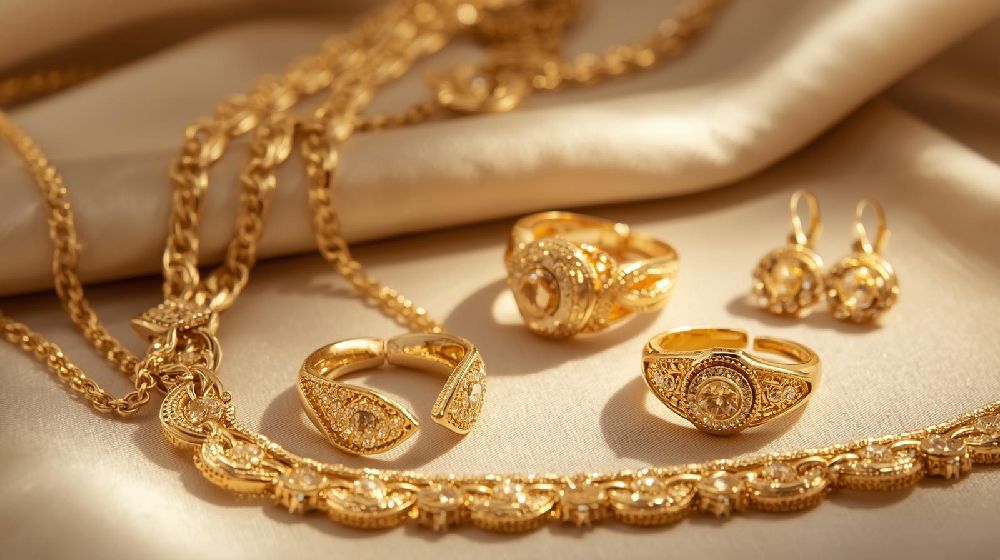
 In today’s international gold market, exporting 22K jewelry requires more than beautiful design. Global buyers demand purity assurance, weight precision, durability, documentation, and consistency at scale. Manufacturers must align their production systems with international benchmarks to compete confidently across borders.
For premium manufacturers like DVN Jewelry, meeting global export standards is not a final inspection step — it is a structured process embedded into every stage of production.
🌍 Understanding Global Expectations in 22K Gold
Export markets typically expect:
-
91.6% purity (916 gold standard)
-
Accurate weight tolerance
-
Structural durability
-
Consistent finishing quality
-
Transparent documentation
-
On-time bulk delivery
Failure in any one of these areas can impact long-term business relationships.
1️⃣ Strict Gold Purity Control (916 Standard)
Purity is the foundation of international trust.
To maintain 22K standards, structured manufacturers implement:
-
Controlled alloy mixing ratios
-
Verified raw gold sourcing
-
Batch-wise purity testing
-
Digital karat verification
-
Internal tolerance benchmarks
Purity control ensures that every exported piece meets global compliance expectations.
2️⃣ Precision Weight Accuracy
Gold is a high-value commodity. Even small deviations affect pricing, invoicing, and customer trust.
Export-focused production includes:
-
Digital micro-weighing systems
-
Standard weight references for each design
-
Pre- and post-polish weight checks
-
Batch-level variance monitoring
Weight accuracy protects both brand reputation and buyer confidence.
3️⃣ Structured Production Systems for Consistency
International buyers often place large, repeat orders. Consistency across batches is critical.
A disciplined system includes:
-
Standard Operating Procedures (SOPs)
-
Workflow documentation
-
Design coding and batch tracking
-
Process monitoring at each stage
This ensures that 1,000 pieces look and weigh the same — not just the first 10.
4️⃣ Multi-Level Quality Inspection
Meeting export standards requires layered inspection.
Quality checks typically include:
-
Structural strength testing
-
Lock and hinge functionality checks
-
Surface finish inspection
-
Polish consistency evaluation
-
Final weight verification
Multiple inspection points reduce risk before shipment.
5️⃣ Engineering for Durability
Export markets often expect jewelry that withstands daily wear across climates and usage patterns.
Modern manufacturing integrates:
-
Laser welding for seamless joints
-
Balanced thickness engineering
-
Reinforced clasp mechanisms
-
Stress-tested structural design
Durability strengthens international credibility.
6️⃣ Gold Loss Management & Recovery Systems
Scalable export production must control gold loss carefully.
Structured monitoring includes:
-
Gold issued vs finished weight tracking
-
Scrap recovery systems
-
Rework analysis
-
Department-wise loss benchmarking
Efficient gold management directly impacts export profitability.
7️⃣ Documentation & Traceability
Global trade demands transparency.
Export-ready systems include:
-
Batch identification codes
-
Weight and purity documentation
-
Production tracking reports
-
Dispatch validation records
Clear documentation builds professional trust with international buyers.
8️⃣ Scalability Without Quality Fluctuation
A key challenge in exports is maintaining quality while increasing volume.
By combining:
-
Technology integration
-
Skilled craftsmanship
-
Process discipline
-
Continuous monitoring
manufacturers can scale confidently without compromising standards.
The Competitive Advantage
Brands that successfully meet global export standards demonstrate:
-
Precision
-
Reliability
-
Engineering excellence
-
Operational discipline
-
Long-term consistency
These qualities build lasting global partnerships.
Conclusion
Meeting global export standards in 22K gold jewelry requires more than compliance — it requires a culture of quality embedded in every process.
Through structured production systems, precision engineering, strict purity control, and disciplined quality inspection, DVN Jewelry reflects how modern manufacturers can compete confidently in international markets.
In the global gold industry, excellence is not optional — it is expected.