
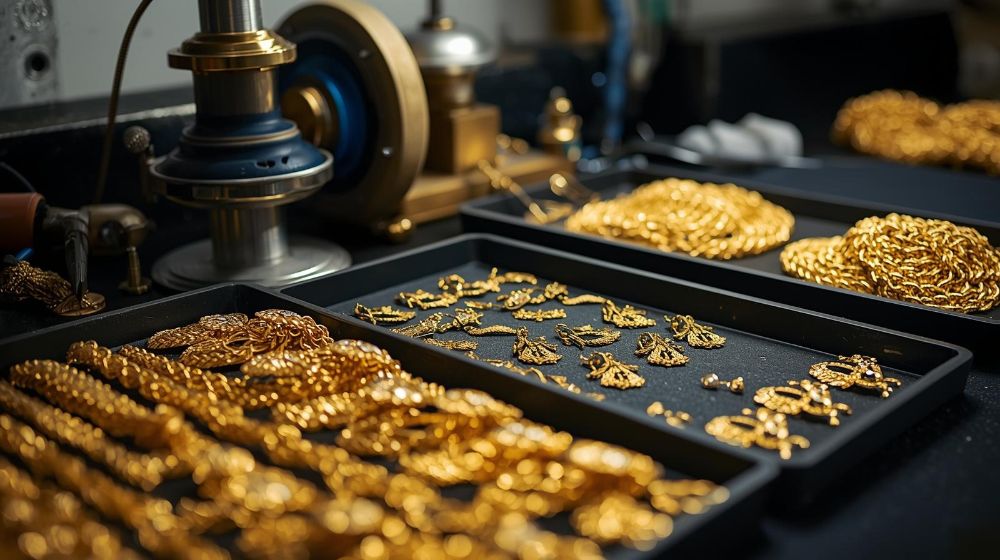
As consumers become more conscious about the environmental impact of their purchases, the jewelry industry is undergoing a major shift. Solid gold mining is resource-intensive, costly, and often linked to ecological damage. In response, the demand for sustainable alternatives has surged — and gold-filled jewelry is emerging as one of the most responsible options on the market.
Gold-filled jewelry manufacturers are redefining how luxury can be produced with minimal environmental harm. By using advanced bonding techniques, reducing waste, and incorporating ethical sourcing practices, they are creating a new category of eco-friendly yet premium-quality jewelry.
1. Reduced Gold Consumption With Maximum Longevity
Gold-filled jewelry uses significantly less solid gold than traditional pieces while still providing decades of shine, durability, and luxury. By applying a thick layer of gold (usually 5% of the total weight) through heat bonding, manufacturers minimize the environmental footprint without compromising quality.
2. Minimal Gold Waste Through Efficient Bonding Technology
Modern manufacturers use advanced heat-and-pressure bonding, ensuring that nearly all gold applied becomes part of the final product. This reduces gold waste dramatically compared to methods like plating, where a large portion of gold particles never reach the final surface.
3. Ethical Gold Sourcing Practices
Many gold-filled manufacturers now source gold from:
-
Recycled gold suppliers
-
Responsible, certified refineries
-
Ethically compliant mines
This shift significantly lowers environmental damage and supports fair labor practices worldwide.
4. Longer Lifespan = Lower Environmental Impact
Gold-filled jewelry can last 10–25 years, sometimes even longer with proper care. A long lifespan means fewer replacements, lower material consumption, and reduced waste — making it a more sustainable choice for everyday and luxury jewelry.
5. Hypoallergenic & Nickel-Free Production
Manufacturers increasingly use base metals like brass or copper, chosen for durability and reduced environmental impact. By avoiding nickel and other harmful additives, gold-filled production is healthier for both the environment and the wearer.
6. Lower Carbon Footprint Compared to Solid Gold Jewelry
Solid gold requires extensive mining, transportation, and refining — all of which contribute to a high carbon footprint.
Gold-filled jewelry requires far less extraction, leading to significantly lower energy use and pollution.
7. Support for Small, Ethical Jewelry Businesses
Sustainable gold-filled manufacturing has opened doors for smaller brands and artisans who want to create eco-conscious jewelry without relying on heavy mining or high metal usage. This helps grow a global network of responsible manufacturers.
8. Recyclability & Responsible End-of-Life Handling
Gold-filled jewelry can be partially recycled, allowing gold refiners to recover the bonded gold layer. This further supports circular economy models within the jewelry industry.
Conclusion
Gold-filled jewelry manufacturing is rapidly becoming a cornerstone of sustainable luxury. By reducing gold usage, lowering environmental harm, and adopting ethical sourcing, manufacturers are offering a responsible alternative that aligns with modern values. As consumers increasingly seek transparency and sustainability, gold-filled jewelry is positioned to become a leading choice for eco-friendly style — proving that luxury can be both beautiful and responsible.